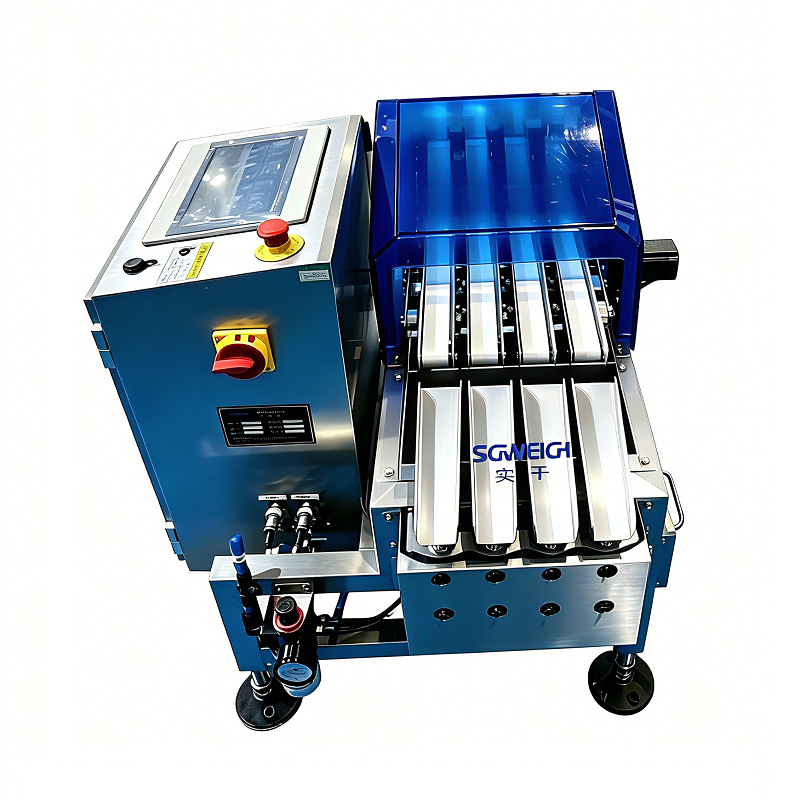
Selecting the right Checkweigher is essential for maintaining product quality, reducing giveaway, and improving production efficiency. A properly matched checkweigher can ensure accurate weight control while keeping pace with your production line.
Why Choosing the Right Checkweigher Matters
An unsuitable checkweigher may lead to:
- Inaccurate weight measurements
- Increased product giveaway
- Higher reject rates
- Production bottlenecks
- Regulatory compliance issues
- Increased maintenance costs
By understanding your production requirements, you can choose a system that delivers reliable and long-term performance.
Key Factors to Consider When Choosing a Checkweigher
1. Product Weight Range
The first consideration is the minimum and maximum weight of the products being inspected.
Examples:
- Pharmaceutical capsules: 10 mg – 2 g
- Tablets: 50 mg – 5 g
- Sachets: 1 g – 100 g
- Bottles: 50 g – 5 kg
- Cartons: 1 kg – 50 kg
Choose a checkweigher designed specifically for your product weight range to achieve optimal accuracy.
2. Required Accuracy
Different industries require different weighing tolerances.
| Industry | Typical Accuracy |
| Pharmaceutical | ±0.1 mg to ±10 mg |
| Food Packaging | ±0.1 g to ±1 g |
| Cosmetics | ±0.1 g to ±0.5 g |
| Logistics | ±5 g to ±50 g |
Higher accuracy generally requires advanced load cells, vibration control, and optimized conveyor design.
3. Production Speed
Determine how many products pass through the line per minute.
Typical capacities include:
- Standard checkweigher: 50–150 products/min
- High-speed checkweigher: 200–400 products/min
- Ultra-high-speed pharmaceutical checkweigher: 600–1,000 products/min
The checkweigher must match or exceed your production speed without sacrificing accuracy.
4. Product Dimensions
Product size affects conveyor width, weighing platform length, and product spacing.
Consider:
- Length
- Width
- Height
- Package stability
Larger products require longer weighing conveyors and stronger support structures.
5. Industry Requirements
Different industries have specific compliance standards.
Pharmaceutical Industry
- GMP compliance
- 21 CFR Part 11 compatibility
- Data traceability
- Audit trails
Food Industry
- HACCP requirements
- FDA compliance
- Washdown design
- Hygienic construction
Cosmetics Industry
- Batch tracking
- Quality control documentation
6. Reject System Type
The reject system should match the product characteristics.
Common reject methods include:
- Air blast rejector
- Pusher rejector
- Swing arm rejector
- Drop flap rejector
- Diverter rejector
Choosing the correct reject system prevents product damage and ensures reliable removal of non-conforming items.
7. Environmental Conditions
Consider the operating environment.
Factors include:
- Dust
- Humidity
- Water exposure
- Temperature fluctuations
- Vibration
For harsh environments, select a stainless-steel checkweigher with a high IP protection rating such as IP65, IP66, or IP69K.
8. Data Collection and Connectivity
Modern Industry 4.0 production lines require advanced communication capabilities.
Look for:
- Ethernet connectivity
- OPC UA communication
- Modbus integration
- MES connectivity
- ERP integration
- USB data export
- Real-time production reports
9. Integration with Other Inspection Equipment
Many manufacturers combine checkweighers with:
- Metal detectors
- X-ray inspection systems
- Vision inspection systems
- Label inspection systems
An integrated solution saves space and improves overall quality control efficiency.
10. Future Expansion
Consider future production requirements.
Ask yourself:
- Will production speed increase?
- Will new product sizes be introduced?
- Will additional quality control systems be added?
Choosing a scalable system protects your investment and reduces future upgrade costs.
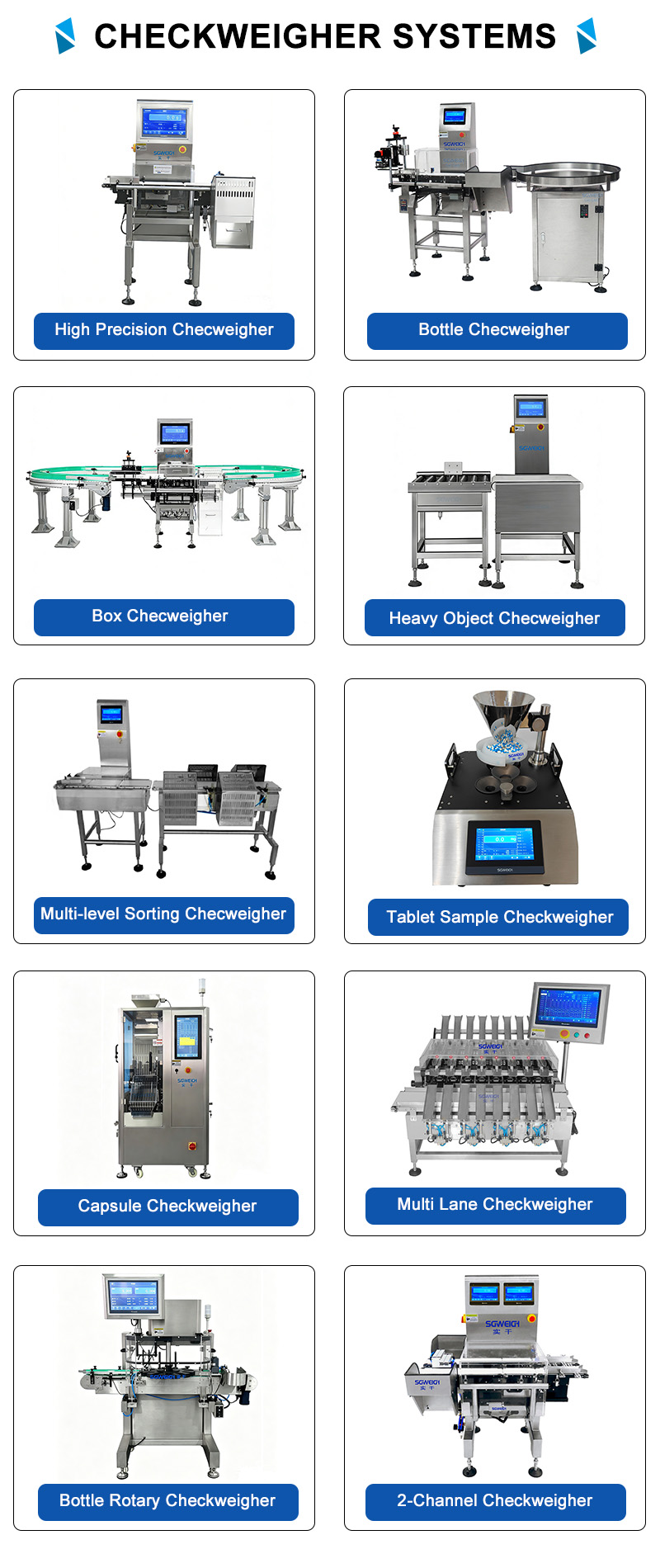
Recommended Checkweigher Types by Application
Capsule and Tablet Production
- Capsule checkweigher
- Tablet checkweigher
- High-precision pharmaceutical checkweigher
Stick Packs and Sachets
- Multi-lane checkweigher
- High-speed sachet checkweigher
Bottles and Containers
- Rotary bottle checkweigher
- Conveyor bottle checkweigher
Cartons and Boxes
- Carton checkweigher
- Case checkweigher
Heavy Products
- Bag checkweigher
- Large carton checkweigher
- Pallet weighing system
Benefits of the Right Checkweigher
- Improved product quality
- Reduced product giveaway
- Increased production efficiency
- Lower labor costs
- Enhanced regulatory compliance
- Better production data visibility
- Higher customer satisfaction
Conclusion
Choosing the right checkweigher involves evaluating product weight, accuracy requirements, production speed, product dimensions, environmental conditions, and integration needs. The ideal system should provide reliable performance, meet industry regulations, and support future production growth. By selecting a checkweigher tailored to your application, manufacturers can achieve higher efficiency, lower operating costs, and superior quality control.