


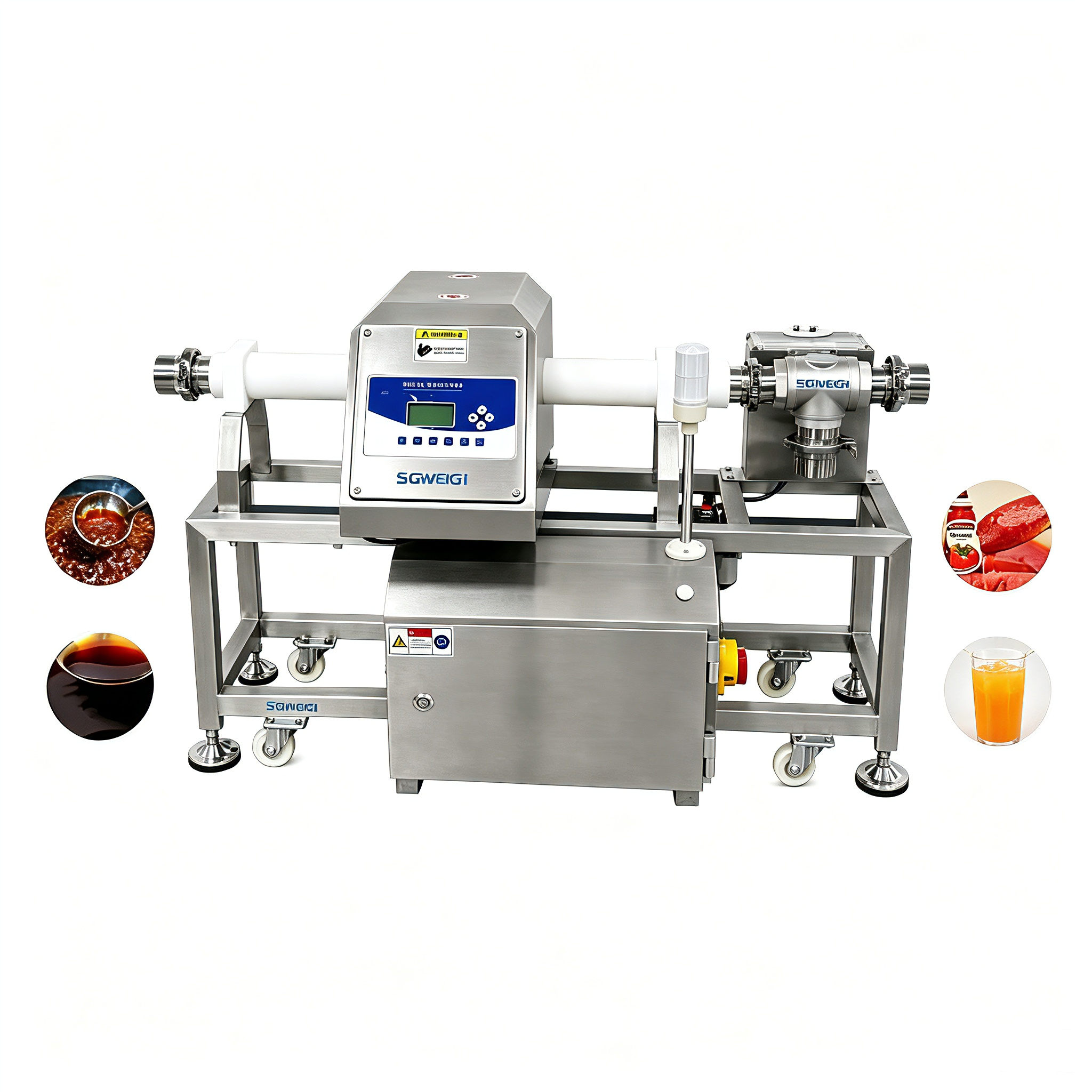

Metal Detectors with conveyors are a type of product inspection device that detects even the smallest metal fragments inside a product and automatically removes defective items from the production line. Industrial metal detectors are often installed on packaging or processing lines to check product movement during the production and packaging stages.
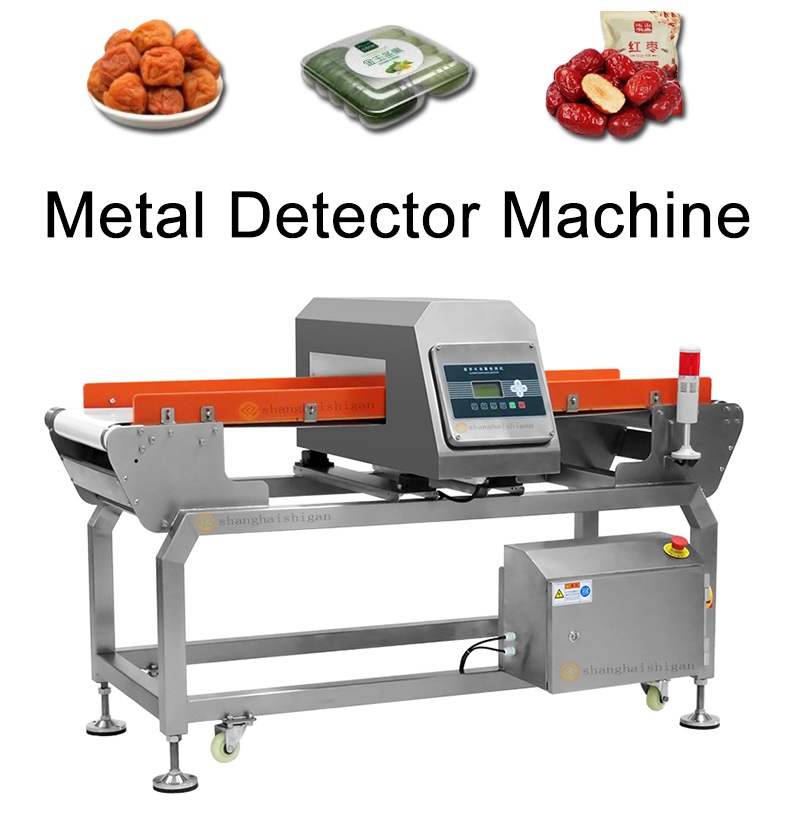

Metal detectors are equipped with a reject mechanism that removes the product from the conveyor once metal is detected. This is an important element of metal detectors to prevent defective products from being packaged and processed along with non-contaminated products. There are several types of reject methods, including the following.
Airflow Rejection
A stream of air is used to remove any contaminated items from the conveyor. This is a quick method of removing product without production having to be stopped and is best suited for lightweight materials.
Drop Plate Rejection
The reject arm for this method rotates and instead of moving forward, the product falls backward and away from the moving conveyor.
Pusher Reject
A pusher is used to push defective products off the conveyor into a reject bin, suitable for heavier and rigid packaging.
Diverter Reject
This method is similar to a pusher, but uses a larger arm, so it is suitable for fragile or bottled products.
Belt Stop Reject
Once the bad product is detected, the conveyor will stop and then remove it.
The reject method of a metal detector varies from machine to machine and ultimately depends on the type of product you are running. If you are running heavy or fragile items, a gentle reject method such as automatic reverse reject will be required. Alternatively, if you are processing lighter items at high speeds, a faster reject will work better, such as airflow reject. We always recommend that you send product dimensions and pictures to ensure that the equipment you are purchasing will meet your production needs.


There are three main categories of metal contaminants
Ferrous – This metal is both magnetic and conductive, so it is easy to detect.
Non-Ferrous – Unlike ferrous metals, this metal is not magnetic, but it is a good conductor, so it is relatively easy to detect.
Stainless Steel – This is the most difficult metal to detect because it is both non-magnetic and a poor conductor.
If you are a packaging or processing facility, metal detectors are essential.They provide protection and assurance for the products your customers consume, your brand image, and reduce liability risks.