

How can manufacturers detect metal contamination in fruit juice, sauces, and other liquid food products without stopping the production line?
This is a common question for food and beverage manufacturers looking to improve food safety, quality control, and production efficiency. When juice, sauce, puree, dairy products, and other liquid foods are transported through closed pipelines, a conventional conveyor metal detector may not be suitable. This is where a Pipeline Metal Detector can provide an effective solution.
What Is a Pipeline Metal Detector?
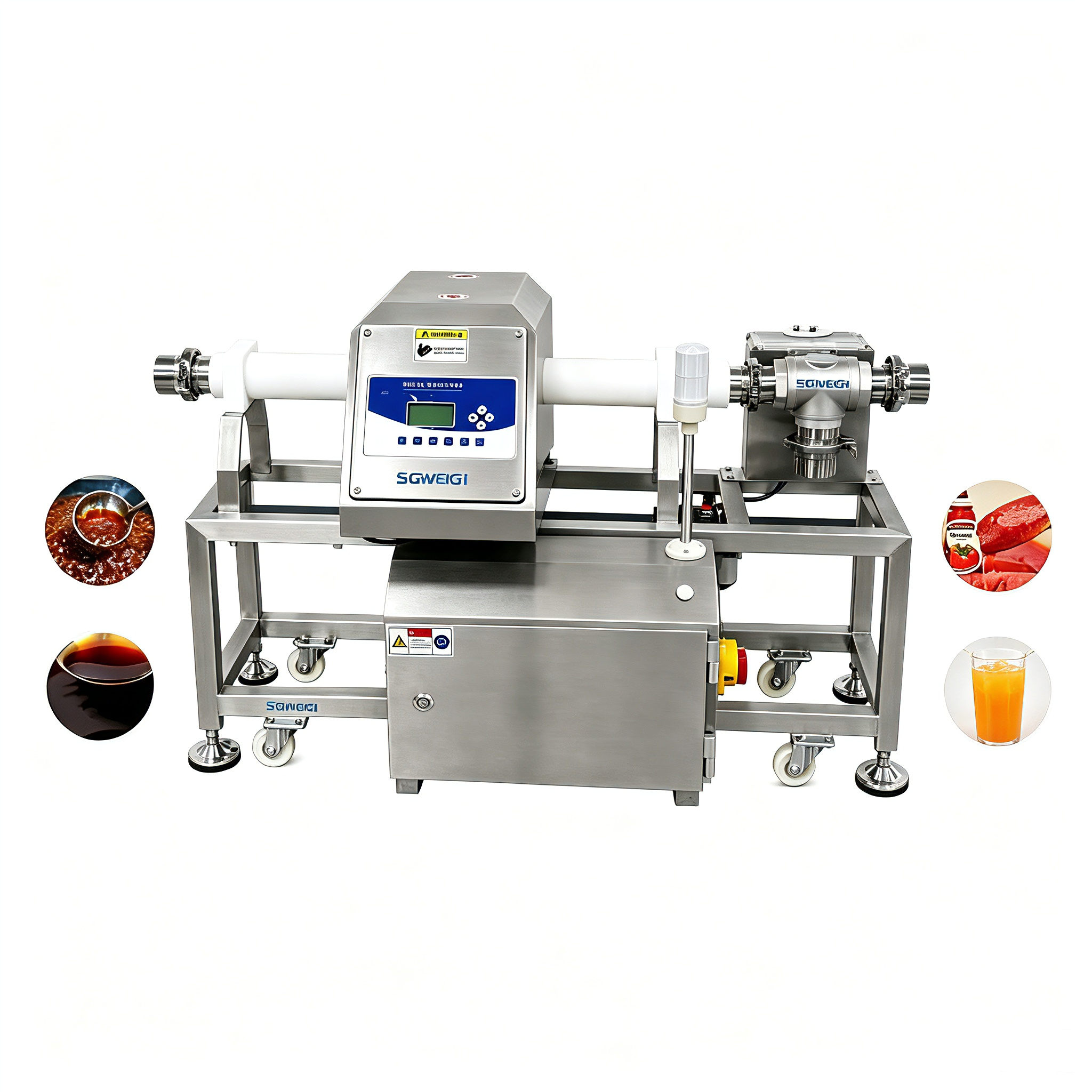
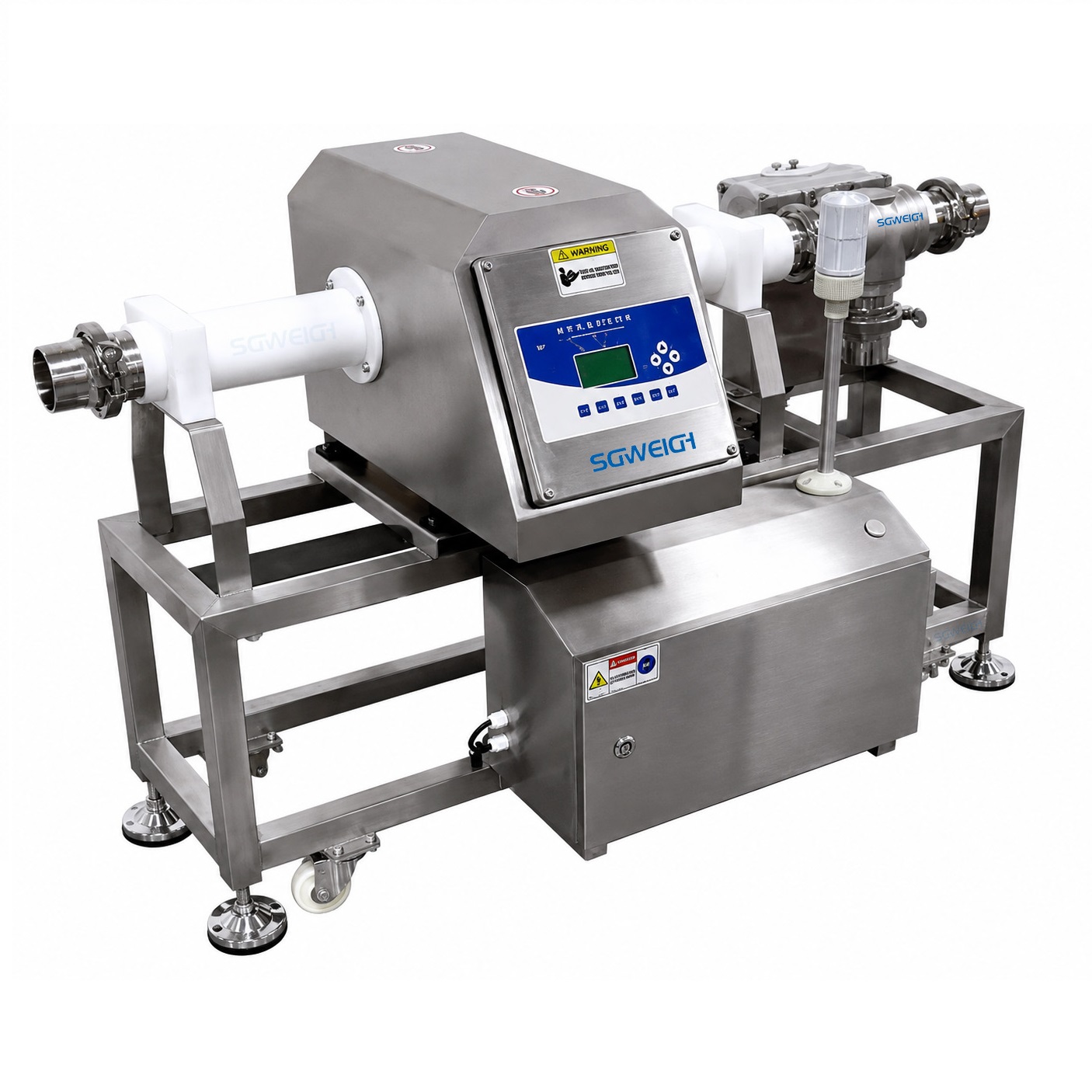
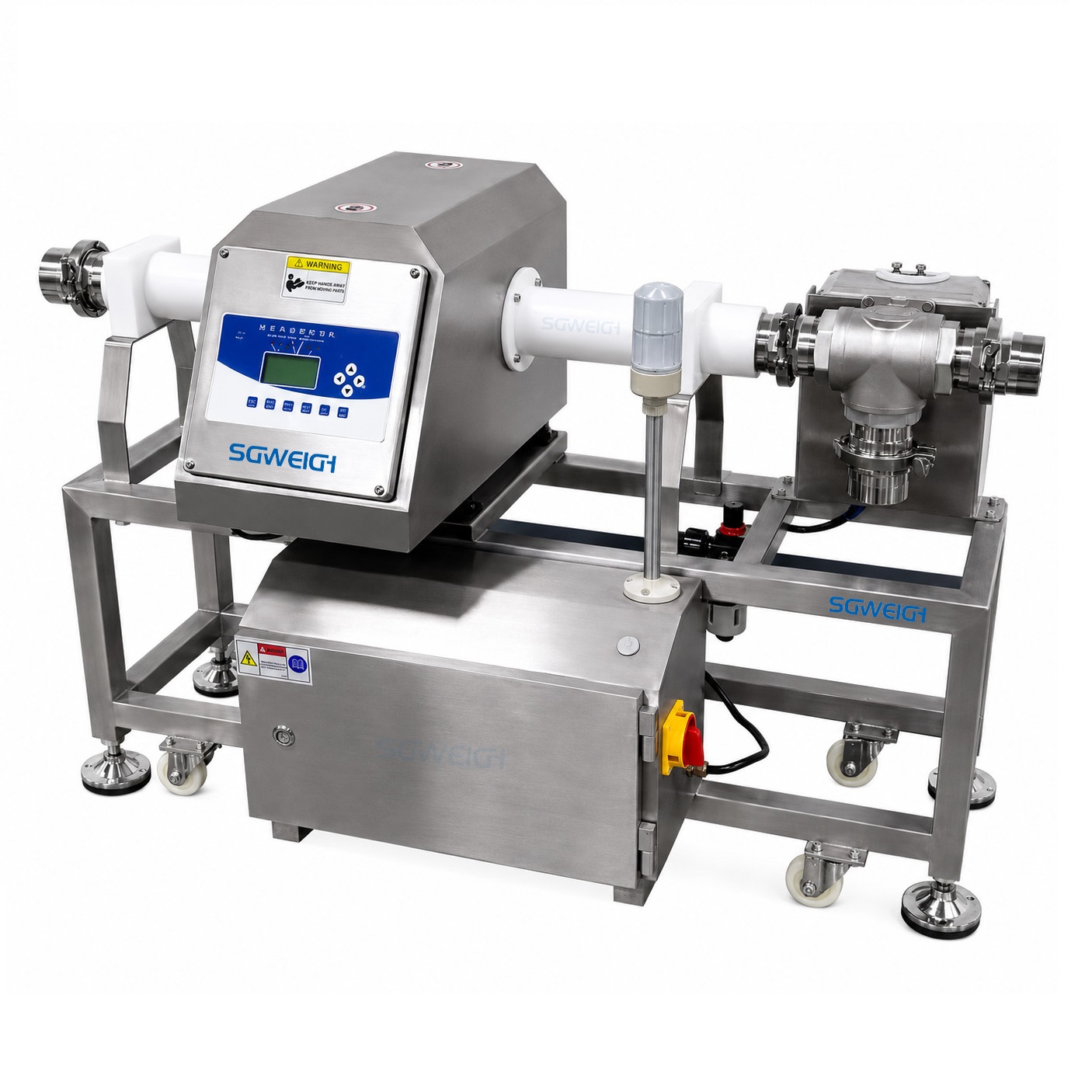
A pipeline metal detector is an inline inspection system designed to detect metallic contaminants directly inside liquid or semi-liquid products while they flow through a production pipeline.
Unlike conveyor metal detectors, this type of system is installed directly into the product pipeline. It can continuously inspect products such as:
- Fruit juice and vegetable juice
- Concentrated juice and puree
- Sauces and ketchup
- Jam and marmalade
- Dairy and liquid food products
- Soups and other pumpable products
This makes a pipeline metal detector particularly useful for modern food and beverage processing lines.
Why Is Metal Detection Important for Fruit Juice Production?
Can fruit juice contain metal contamination?
Although liquid products are processed in controlled production environments, metal contamination can potentially enter the product from pumps, valves, pipelines, processing equipment, maintenance activities, or damaged components.
Small metal fragments may be difficult to identify visually. An inline metal detection system for juice production lines can continuously monitor the product flow and identify metallic contaminants before the product reaches downstream filling or packaging equipment.
This can help manufacturers strengthen their foreign body detection system, improve quality control, and reduce the risk of contaminated products entering the market.
How Does an Inline Metal Detector for Liquid Products Work?
How does a pipeline metal detector detect metal inside flowing juice?
The liquid product passes through the detection aperture or inspection section of the system. The metal detector continuously monitors the product flow and analyzes signals generated by metallic contaminants.
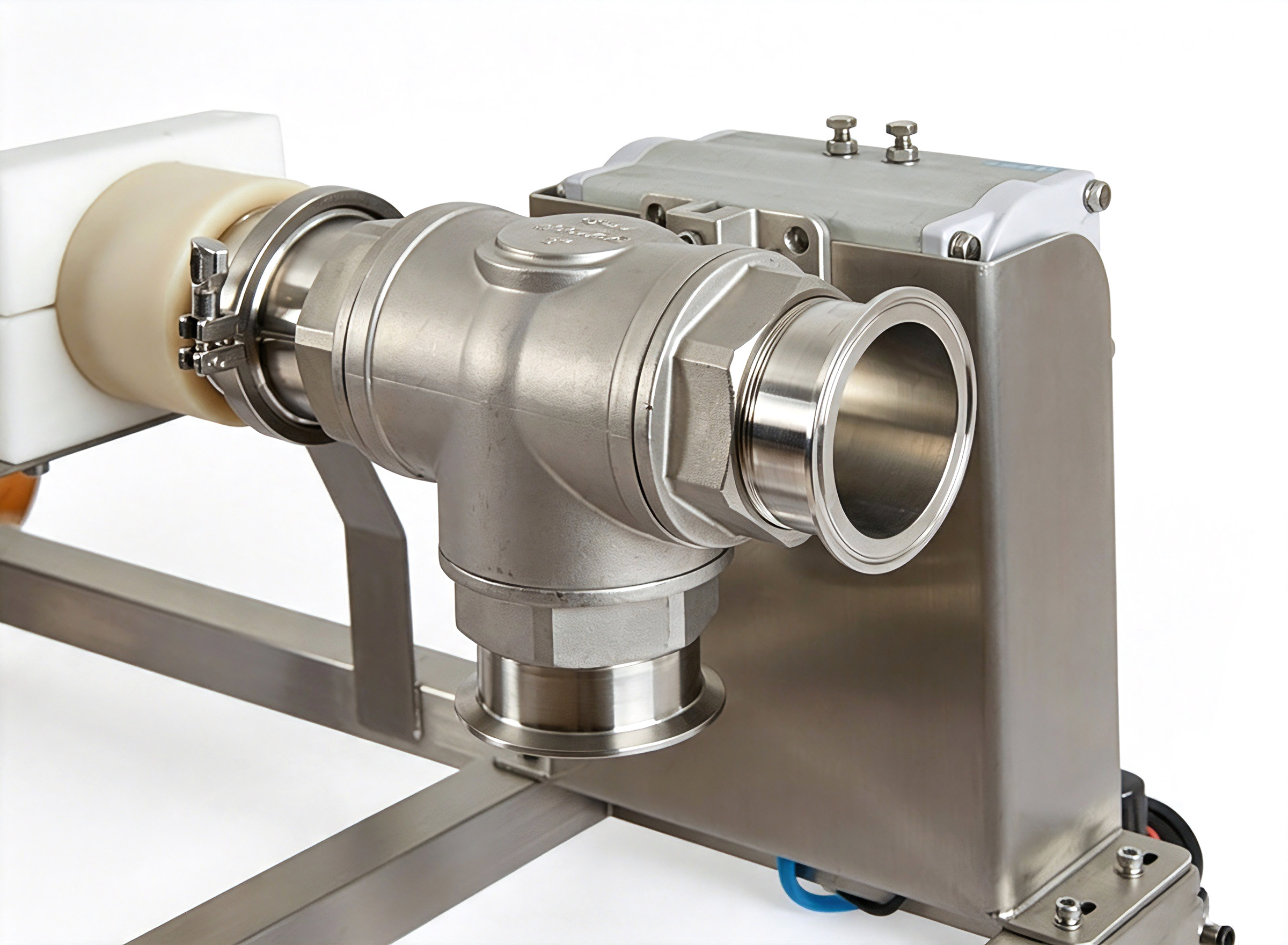
When a metal contaminant is detected, the control system can activate an automatic reject valve. The contaminated product can then be diverted from the main production stream.
This allows the production line to maintain continuous operation while providing automated contamination detection.
What Types of Metal Can a Pipeline Metal Detector Detect?
Can a liquid food metal detector detect stainless steel?
Modern industrial metal detection systems can be configured to detect different types of metallic contaminants, including:
Ferrous metals – such as iron and steel.
Non-ferrous metals – such as aluminum, copper and brass.
Stainless steel – commonly encountered in food-processing environments.
Actual detection sensitivity depends on product characteristics, pipe configuration, installation conditions, and the type and size of the contaminant.
What Products Can Be Inspected by a Liquid Food Metal Detector?
What is the best metal detector for liquid food products?
The appropriate system depends on the product characteristics and production conditions. Pipeline metal detectors can be used for many pumpable products, including:
Juice: apple juice, orange juice, mango juice, grape juice and mixed fruit juice.
Sauces: ketchup, chili sauce, mayonnaise, salad dressing and cooking sauces.
Viscous products: jam, fruit puree, honey and concentrated products.
Other liquid foods: dairy products, soups, vegetable puree and similar pumpable materials.
Why Choose a Pipeline Metal Detector Instead of a Conveyor Metal Detector?
What is the difference between a pipeline metal detector and a conveyor metal detector?
The key difference is how the product is transported.
A conveyor metal detector is designed for products traveling on a belt, while a pipeline metal detector is designed for liquid or semi-liquid products transported through closed pipes.
For juice and other pumpable products, pipeline detection can provide:
Continuous online inspection without transferring liquid to a conveyor.
Better integration with pumps, filling systems, processing equipment and pipelines.
Automatic rejection when metal contamination is detected.
Efficient production flow for high-volume liquid food processing.
What Should You Consider When Buying a Pipeline Metal Detector?
Several factors should be considered before selecting a system:
Product type: Juice, sauce, puree, dairy or another liquid product.
Pipe diameter: The detector and pipeline connection should match the production line.
Flow rate: The system should be designed according to the required production capacity.
Product characteristics: Viscosity, temperature, conductivity and other properties can affect detection performance.
Operating pressure: The pipeline configuration should match actual process conditions.
Reject method: Different applications may require different automatic rejection solutions.
Hygienic requirements: Food-processing applications generally require suitable stainless-steel construction and sanitary connections.
Providing these parameters to the equipment manufacturer allows the system to be configured more accurately for the production line.
Can a Pipeline Metal Detector Improve Food Production Efficiency?
Can metal detection be integrated into an automated juice production line?
Yes. Pipeline metal detection can be integrated with upstream processing and downstream filling or packaging equipment. Detection results can also be connected to the production control system depending on the required automation configuration.
This makes the industrial pipeline metal detector not only a foreign-body inspection device, but also an important part of an automated quality-control system.
Why Choose SGWEIGH Pipeline Metal Detection Equipment?
SGWEIGH provides customized metal detection solutions for liquid and semi-liquid product applications. The equipment can be configured according to product characteristics, pipeline diameter, production capacity, installation space, and automatic rejection requirements.
For manufacturers searching for a Pipeline Metal Detector for Juice, Inline Metal Detector for Liquid Food, Liquid Food Metal Detector, or Industrial Pipeline Metal Detection System, customized equipment can provide a more practical solution than using a standard conveyor inspection machine.
Conclusion
How can liquid food manufacturers achieve continuous metal contamination detection?
For juice, sauces, puree and other pumpable food products, a pipeline metal detector provides a direct way to inspect products while they remain inside the production pipeline. With continuous detection, automatic rejection and customized pipeline integration, it can become an important part of a modern food safety and quality inspection system.
For companies looking for a Pipeline Metal Detector for Juice, selecting the system according to product properties, flow rate, pipe size and production requirements is essential for achieving stable and reliable inspection performance.

TAGS