

As production lines become faster and quality standards become stricter, manufacturers are looking for smarter inspection solutions that improve efficiency without increasing production costs. One question is becoming increasingly common:
Why combine a checkweigher and metal detector into one inspection system?
The answer lies in productivity, product safety, and compliance.
What Is a Checkweigher and Metal Detector Combination?
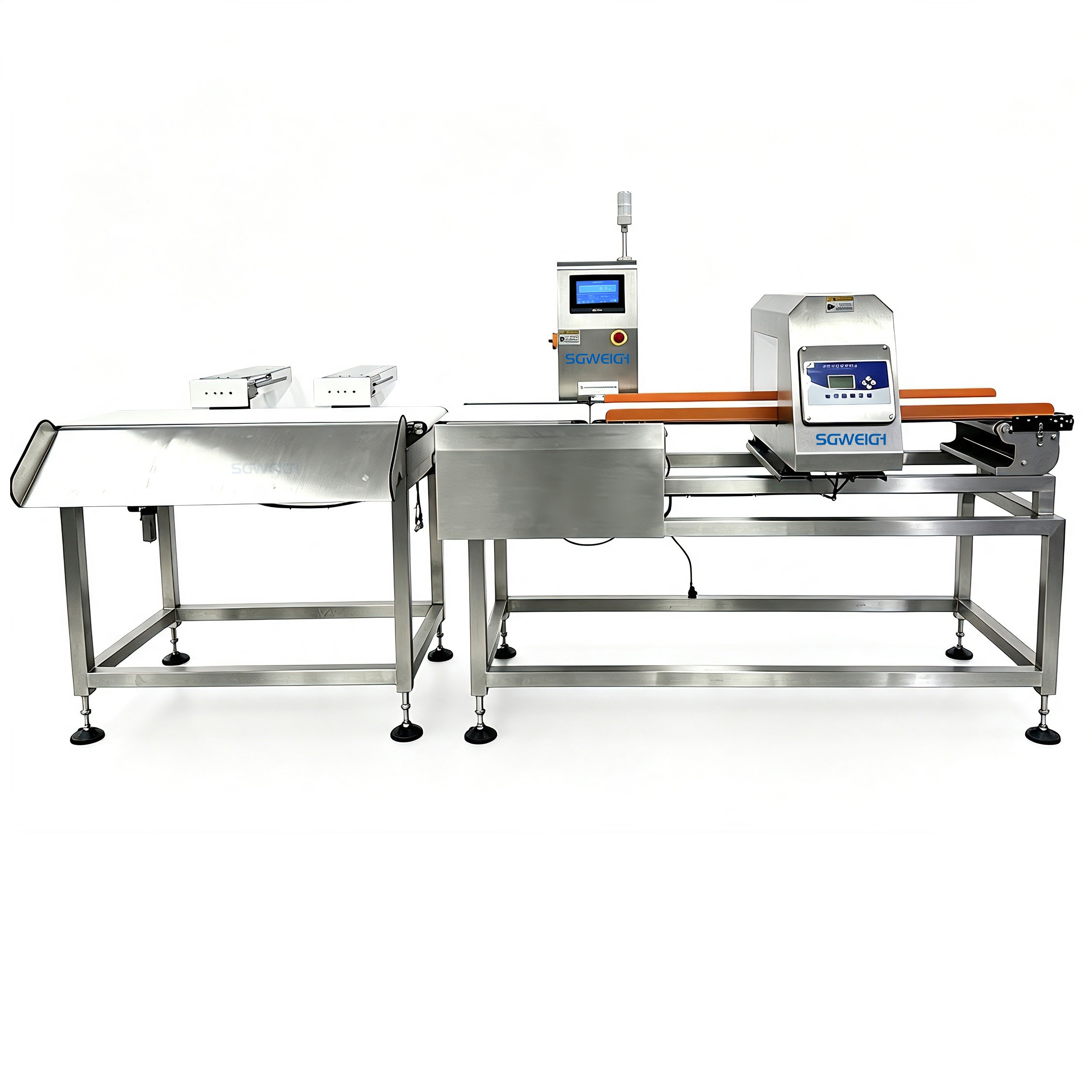
A Checkweigher and Metal Detector Combination is an integrated inspection system that performs dynamic weight verification and metal contamination detection on a single conveyor line.
Instead of installing two independent machines, manufacturers can inspect product weight and detect ferrous, non-ferrous, and stainless-steel contaminants in one continuous process. The result is a more compact production line with fewer transfer points and higher inspection efficiency.
Why Is an Integrated Inspection System Better?
Compared with separate machines, a combination system offers several technical advantages:
- Simultaneous weight and metal inspection
- Reduced production line footprint
- Lower installation and maintenance costs
- Faster product throughput
- Single reject system for simplified operation
- Higher inspection consistency
- Reduced product handling between inspection stages
For manufacturers operating high-speed packaging lines, these improvements can significantly increase Overall Equipment Effectiveness (OEE).
Which Industries Benefit the Most?
Combined inspection systems are widely used in industries requiring strict quality control, including:
- Food processing
- Beverage manufacturing
- Bakery products
- Frozen foods
- Meat and seafood
- Dairy products
- Snacks and confectionery
- Cosmetics
- Daily chemical products
- Consumer goods
Any production line requiring both weight accuracy and contaminant detection can benefit from an integrated inspection solution.


How Does the System Improve Product Quality?
A combination system performs two critical quality inspections before products leave the factory.
First, the checkweigher verifies that every package meets the target weight, helping manufacturers reduce giveaway while preventing underweight products.
Second, the metal detector identifies metallic contaminants that may enter the production process through raw materials, machinery wear, or damaged equipment.
Products failing either inspection are automatically rejected, ensuring only qualified products reach customers.

What Features Should You Look For?
When selecting a professional Checkweigher and Metal Detector Combination, manufacturers should consider:
- High-speed dynamic weighing
- Multi-frequency metal detection
- High weighing accuracy
- Stable conveyor design
- Intelligent reject system
- Product memory storage
- Touchscreen operation
- Data statistics and traceability
- Stainless steel construction
- Easy cleaning and maintenance
- Integration with production lines and MES systems
These features help maximize production efficiency while supporting quality management requirements.

Is a Combined Inspection System Worth the Investment?
For manufacturers aiming to improve production efficiency, reduce operating costs, and strengthen quality control, the answer is yes.
A Checkweigher and Metal Detector Combination not only simplifies inspection but also minimizes installation space, reduces equipment investment, and enhances production reliability. As global manufacturing continues to prioritize automation and food safety, integrated inspection systems are becoming the preferred solution for modern production lines.

TAGS