


In modern manufacturing and packaging industries, accurate weight control is essential for product quality, regulatory compliance, and production efficiency. Two commonly used weighing systems are the static scale and the Dynamic Checkweigher. Although both measure weight, their working principles, applications, and performance capabilities are significantly different.
What Is a Static Scale?
A static scale measures the weight of a product while it remains completely stationary on the weighing platform. The item must stop moving before an accurate weight reading can be obtained.
Static scales are widely used in warehouses, laboratories, quality control departments, and low-volume production environments where speed is not a critical factor.
Benefits of Static Scales
- High weighing stability
- Simple operation and maintenance
- Lower initial investment cost
- Suitable for manual weight verification
- Ideal for sample inspections and laboratory testing
Common Applications
- Warehouse inventory weighing
- Pharmaceutical laboratories
- Raw material inspection
- Shipping and receiving verification
What Is a Dynamic Checkweigher?
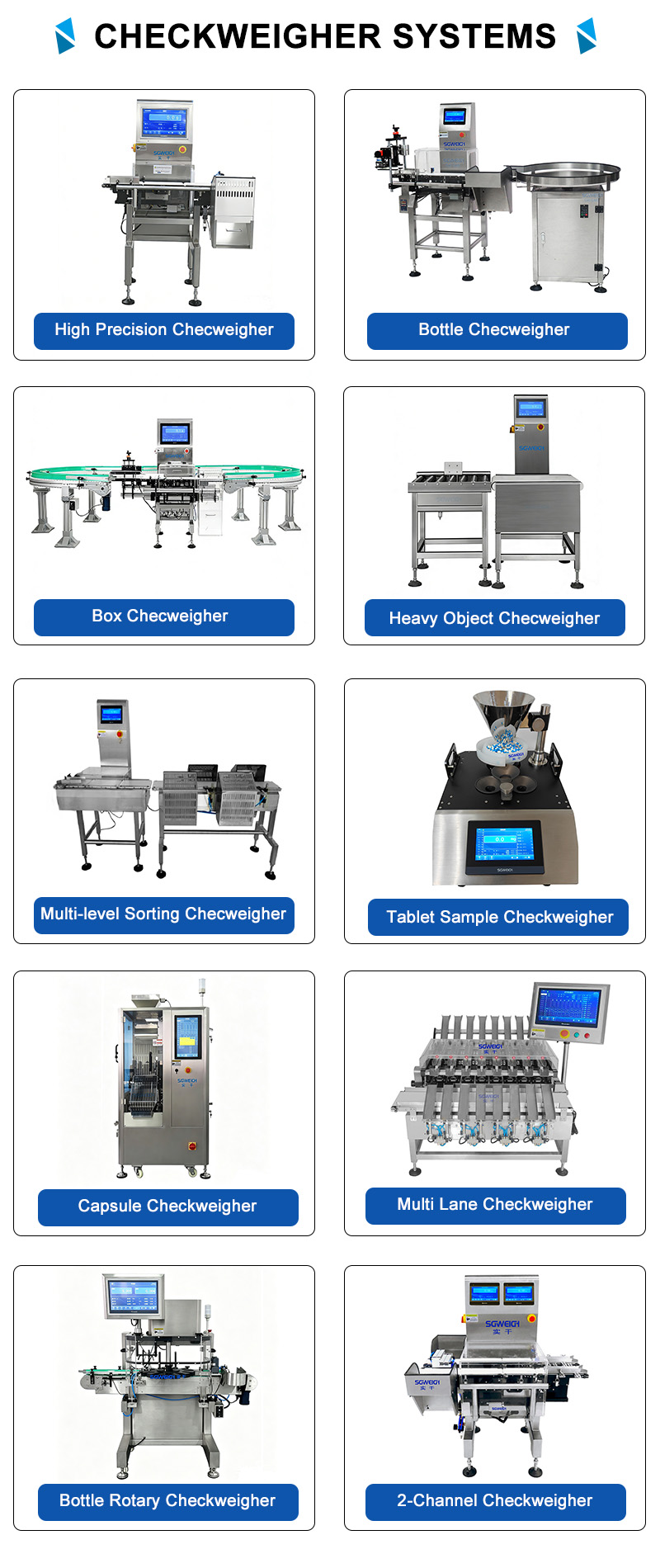
A dynamic checkweigher, also known as an in-motion checkweigher, automatically weighs products while they move continuously on a conveyor belt. There is no need to stop the product flow, making it ideal for high-speed production lines.
Dynamic checkweighers use advanced load cell technology and intelligent filtering algorithms to provide accurate weight measurements in real time.
Benefits of Dynamic Checkweighers
- 100% online weight inspection
- High-speed weighing capability
- Automatic rejection of underweight or overweight products
- Reduced labor costs
- Real-time production data collection
- Improved product quality control
Common Applications
- Food and beverage packaging lines
- Pharmaceutical production facilities
- Cosmetics manufacturing
- Consumer goods packaging
- Logistics and distribution centers
Static Scale vs Dynamic Checkweigher
| Feature | Static Scale | Dynamic Checkweigher |
|---|---|---|
| Weighing Method | Stationary weighing | In-motion weighing |
| Product Flow | Manual or intermittent | Continuous automatic operation |
| Inspection Rate | Sampling inspection | 100% product inspection |
| Production Speed | Low | High |
| Automation Level | Low | High |
| Reject Function | Manual | Automatic |
| Data Collection | Limited | Real-time production monitoring |
| Best Use | Laboratories and warehouses | Production lines and packaging facilities |
Which Weighing System Is Right for Your Business?
If your operation requires occasional weight verification, laboratory testing, or warehouse weighing, a static scale may be the most cost-effective solution.
However, if you need to inspect every product on a high-speed production line while improving efficiency and reducing giveaway, a dynamic checkweigher is the better choice. Dynamic checkweighers help manufacturers maintain consistent product quality, comply with industry regulations, and optimize production performance.

Conclusion
Understanding the difference between a static scale and a dynamic checkweigher is essential when selecting the right weighing solution for your operation. While static scales provide accurate stationary measurements for manual applications, dynamic checkweighers deliver automated, high-speed weight inspection for modern production lines.
As manufacturing demands continue to increase, dynamic checkweighers are becoming the preferred choice for companies seeking improved efficiency, quality assurance, and regulatory compliance.

TAGS