■ Product Overview
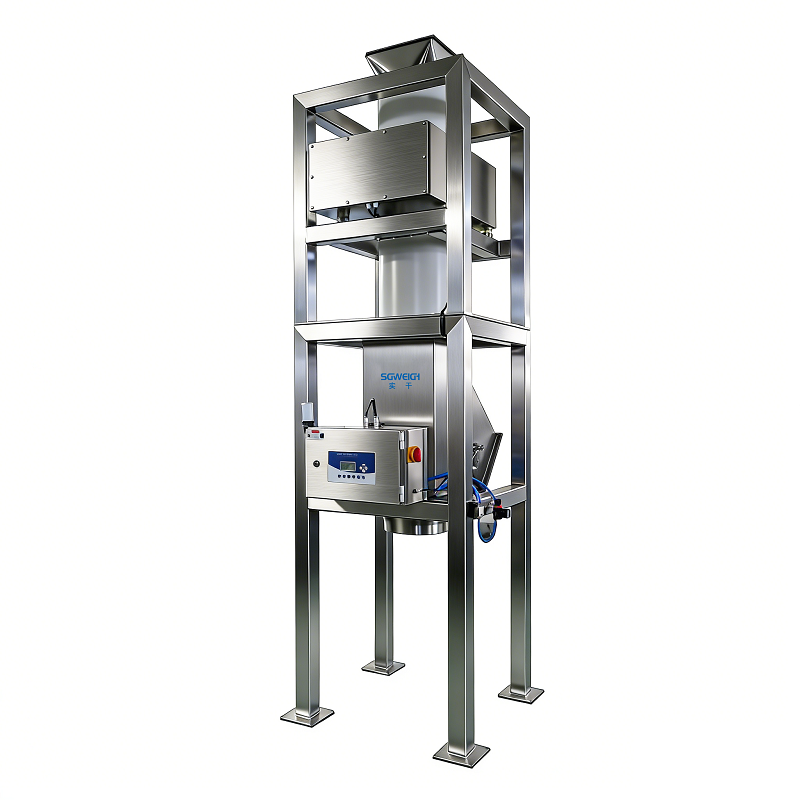
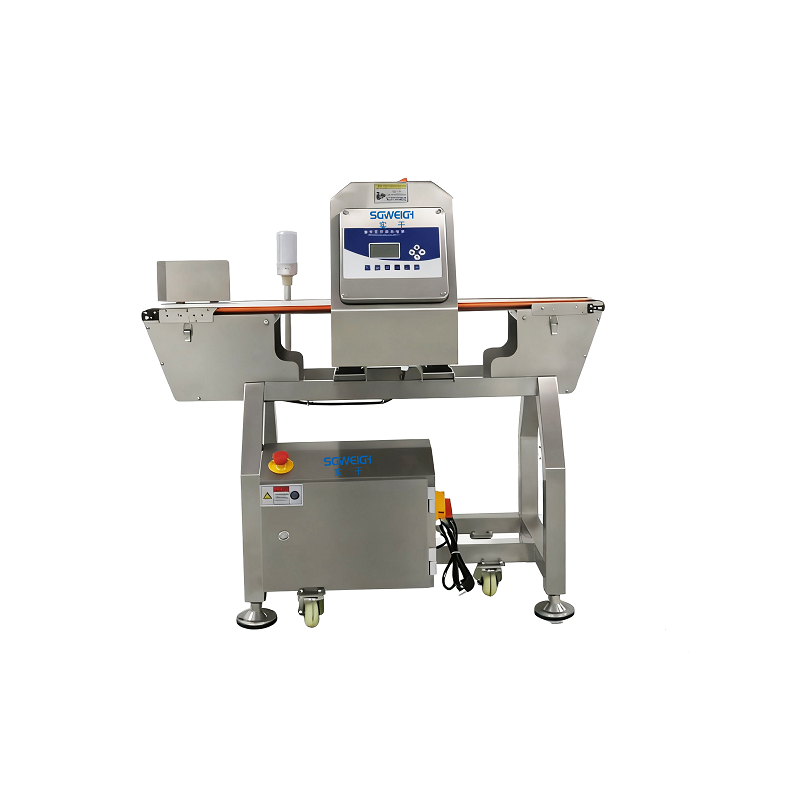
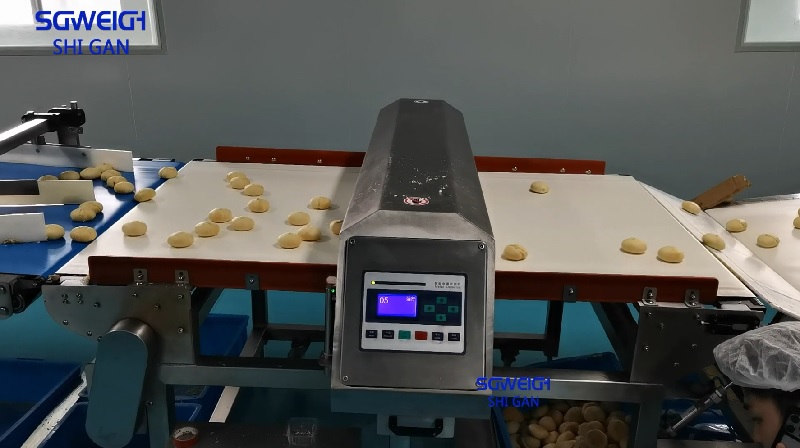
Conveyor Food Metal Detector Machine is an automated inspection device used in food production lines. It can detect metals such as iron, stainless steel, and copper in food online. Typically installed on food processing or packaging lines, it uses high-sensitivity electromagnetic detection technology to monitor products in real time. Once a product containing metal impurities is detected, the system automatically triggers a rejection device to remove the defective product from the production line.
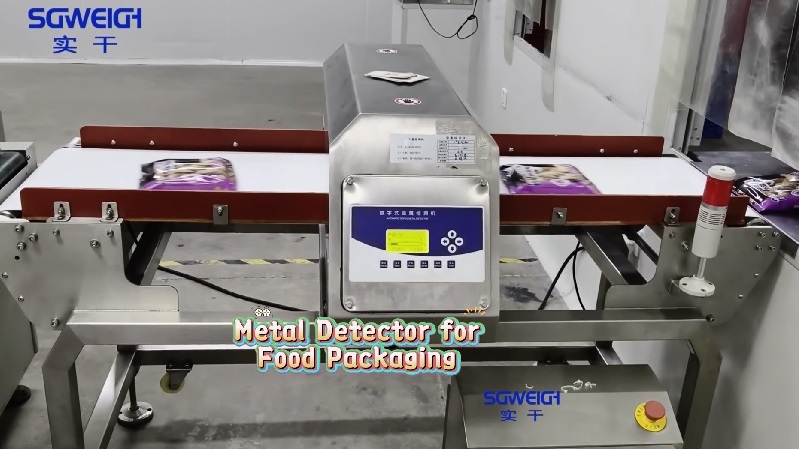
Metal Detector for Food Processing Lines is widely used in the meat processing, seafood, dairy, confectionery, baked goods, frozen foods, condiments, and packaged food industries.
■ Tech Specifications
| Type | SG-M400 |
| Detection sensitivity: in empty state | H-100mm: Fe≥Φ0.8mm, Non-Fe≥Φ1.5mm, SUS≥Φ1.5mm
H-120mm: Fe≥Φ0.8mm, Non-Fe≥Φ1.5mm, SUS≥Φ2.0mm H-150mm: Fe≥Φ1.0mm, Non-Fe≥Φ1.5mm, SUS≥Φ2.0mm H-200mm: Fe≥Φ1.2mm, Non-Fe≥Φ2.0mm, SUS≥Φ2.5mm |
| Effective detection hole width | 150-1000mm customized according to requirements |
| Effective detection hole height | 80-500mm customized according to requirements |
| Maximum speed of conveyor belt | 25m/min |
| Conveyor belt material | food grade PU belt |
| Display and operation mode | LED fast key input/Touchscreen |
| Power requirements | AC220V 50HZ |
| Alarm mode | metal detection, alarm belt stop or automatic removal |
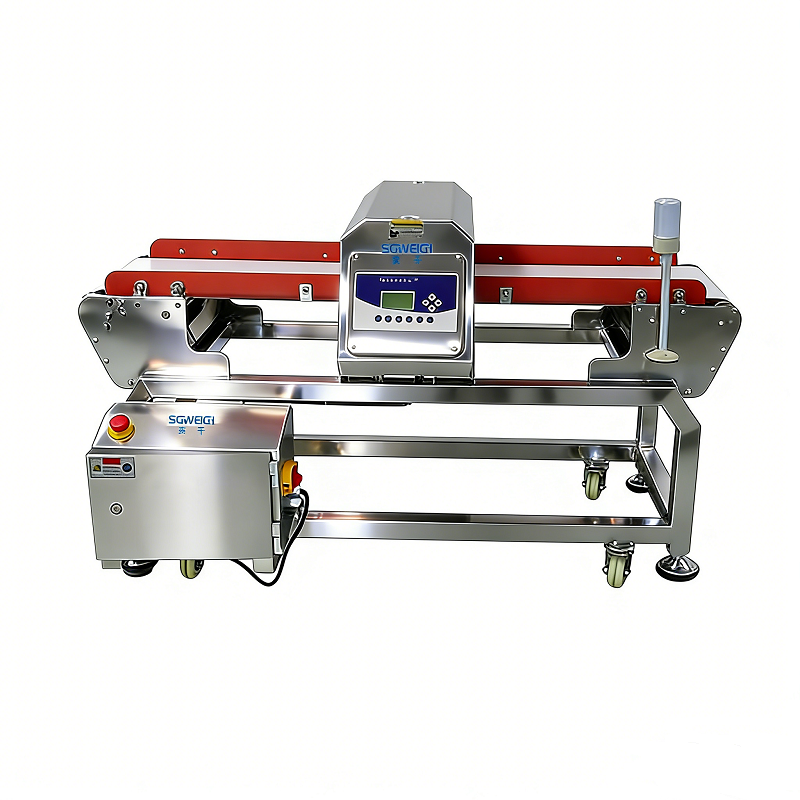
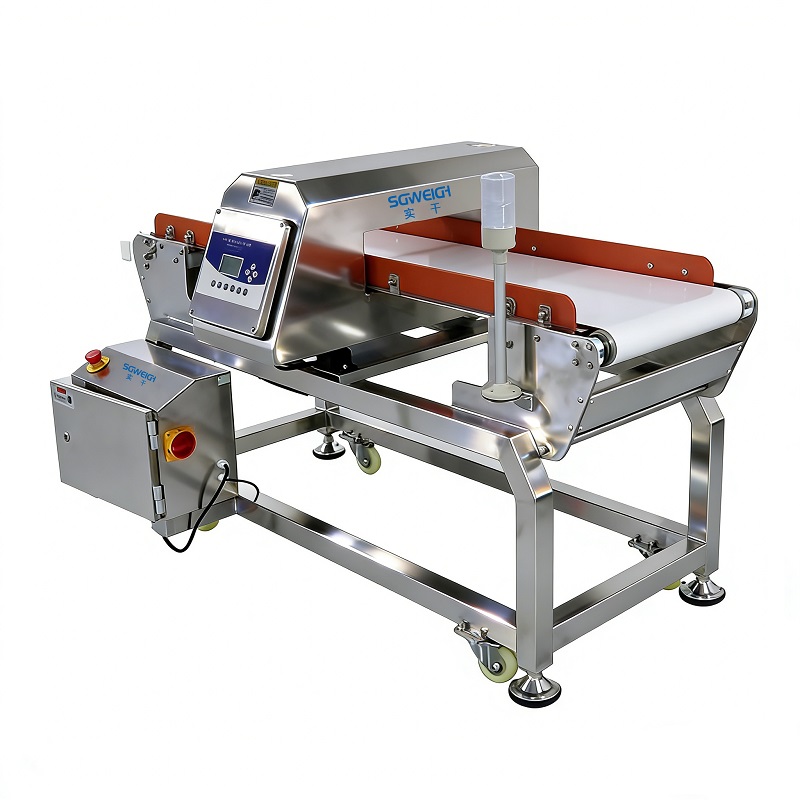
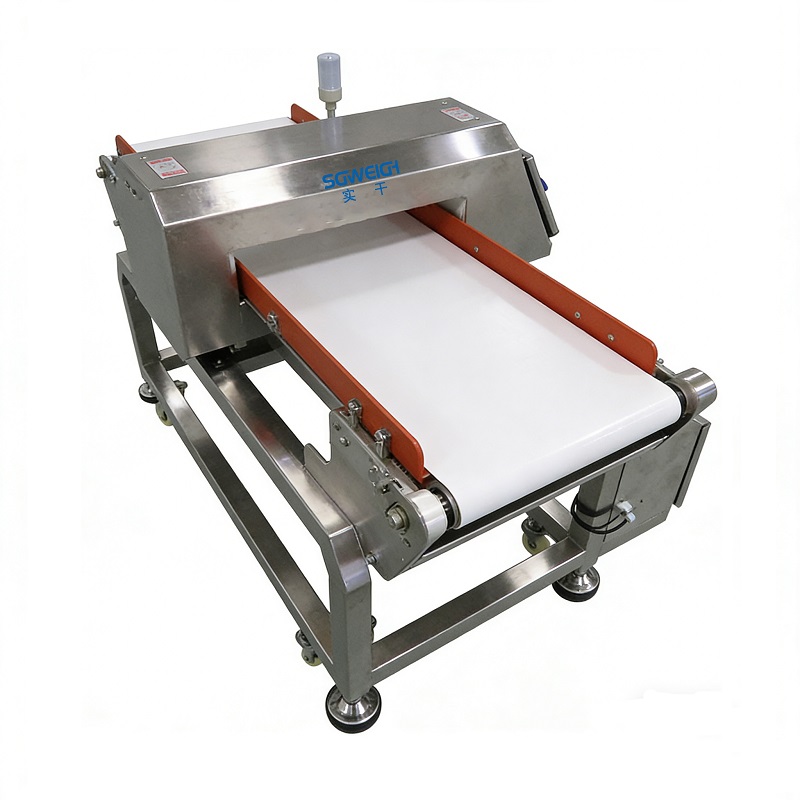

■ Main Features
1. High Sensitivity Metal Detection
The food metal detector machine can detect ferrous, non-ferrous, and stainless steel contaminants in food products with high accuracy.
2. Automatic Reject System
The system automatically removes contaminated products from the production line to ensure only safe food products continue to packaging.
3. Real-Time Inline Inspection
Designed for continuous operation, the metal detector performs real-time inspection on high-speed food processing lines.
4. Multi-Product Memory Settings
The machine can store multiple product parameters, allowing quick switching between different food products without recalibration.
5. Advanced Product Effect Compensation
Advanced algorithms minimize product effects from wet, salty, or frozen foods, improving detection accuracy.
6. Food Grade Stainless Steel Structure
The machine features a hygienic stainless steel design that meets food industry sanitation standards.
7. Waterproof and Dustproof Design
With IP65/IP66 protection, the metal detector can operate reliably in harsh food processing environments.
8. Intelligent Alarm and Display System
The system provides visual and audible alarms when metal contamination is detected.
9. Production Data Recording
Some models support data logging and production statistics for better quality control and traceability.
10. Easy Integration with Food Production Lines
The metal detector can be integrated with conveyors, checkweighers, and packaging machines for automated food safety inspection.

■ Application

■ Customers
■ Exhibitions


■ Packaging & Delivery
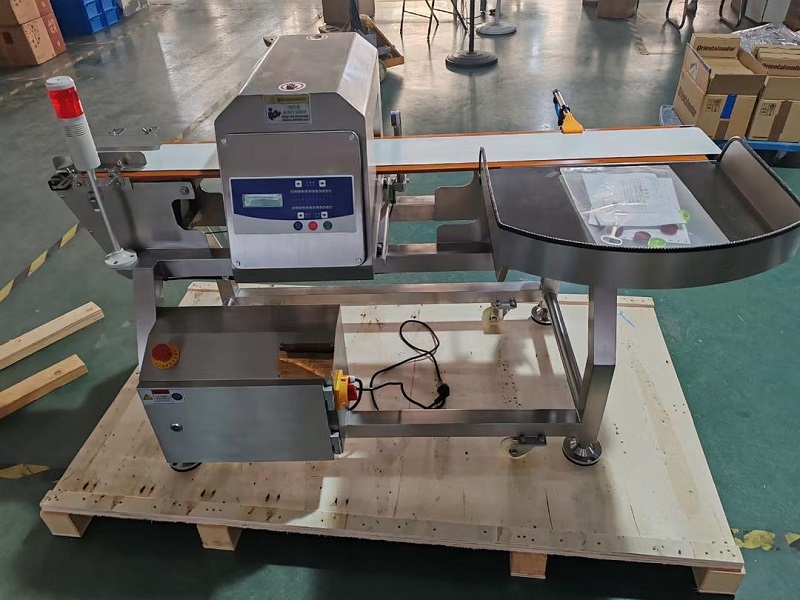
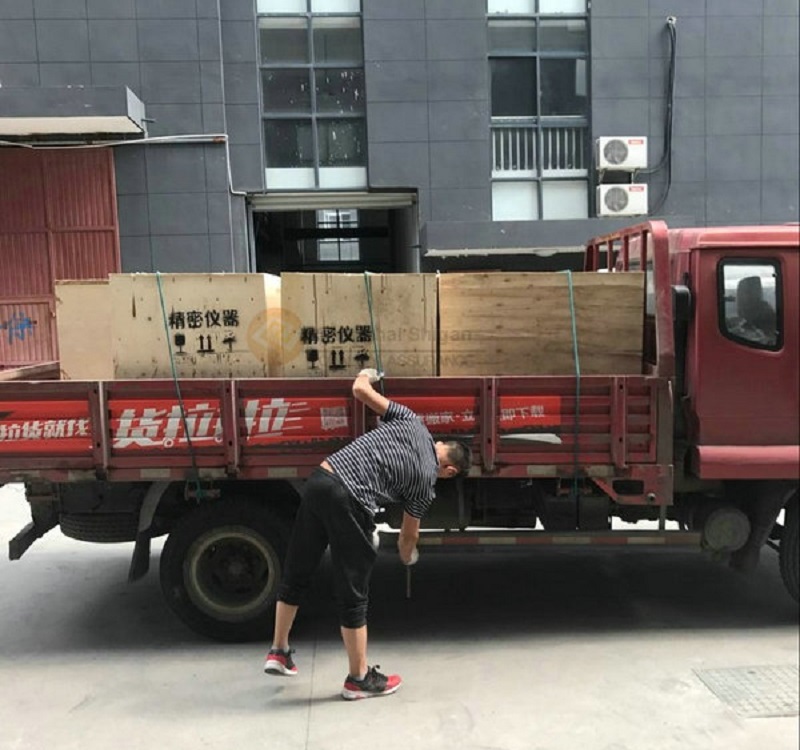
Inner use the plastic wrapping ,out package will use stronger wooden cases.
Our standard package process:
1) Dust & Cleaning
2) Lubricate Drive Parts
3) Divide Machine Into Modules
4) Wrap Modules With Plastic Film
5) Packing Modules into Plywood Cases
6) Mark Shipping Mark In The Cases
If any special requirements, we will pack it as requested.
■ FAQ
-
What metals can it detect?
Ferrous, non‑ferrous, and stainless steel metals in food and packaging.
-
Can it detect non‑metal contaminants?
No. It only detects metal; use X‑ray for glass, stone, or plastic.
-
What affects detection sensitivity?
Product moisture, salt, package size, speed, and electromagnetic interference.
-
Can it work with aluminum foil packaging?
Standard models cannot. Use foil‑compatible or X‑ray systems instead.
-
How often should I calibrate it?
Test with standard pieces daily; full calibration recommended monthly.
-
Why does my machine false alarm?
Product effect, dirty belt, high sensitivity, or nearby electrical interference.
-
Where to install a food metal detector?
After raw materials, before packaging, and as a final check before warehousing.
-
How to maintain the machine?
Clean daily, test regularly, check wiring monthly, and service annually.


TAGS