

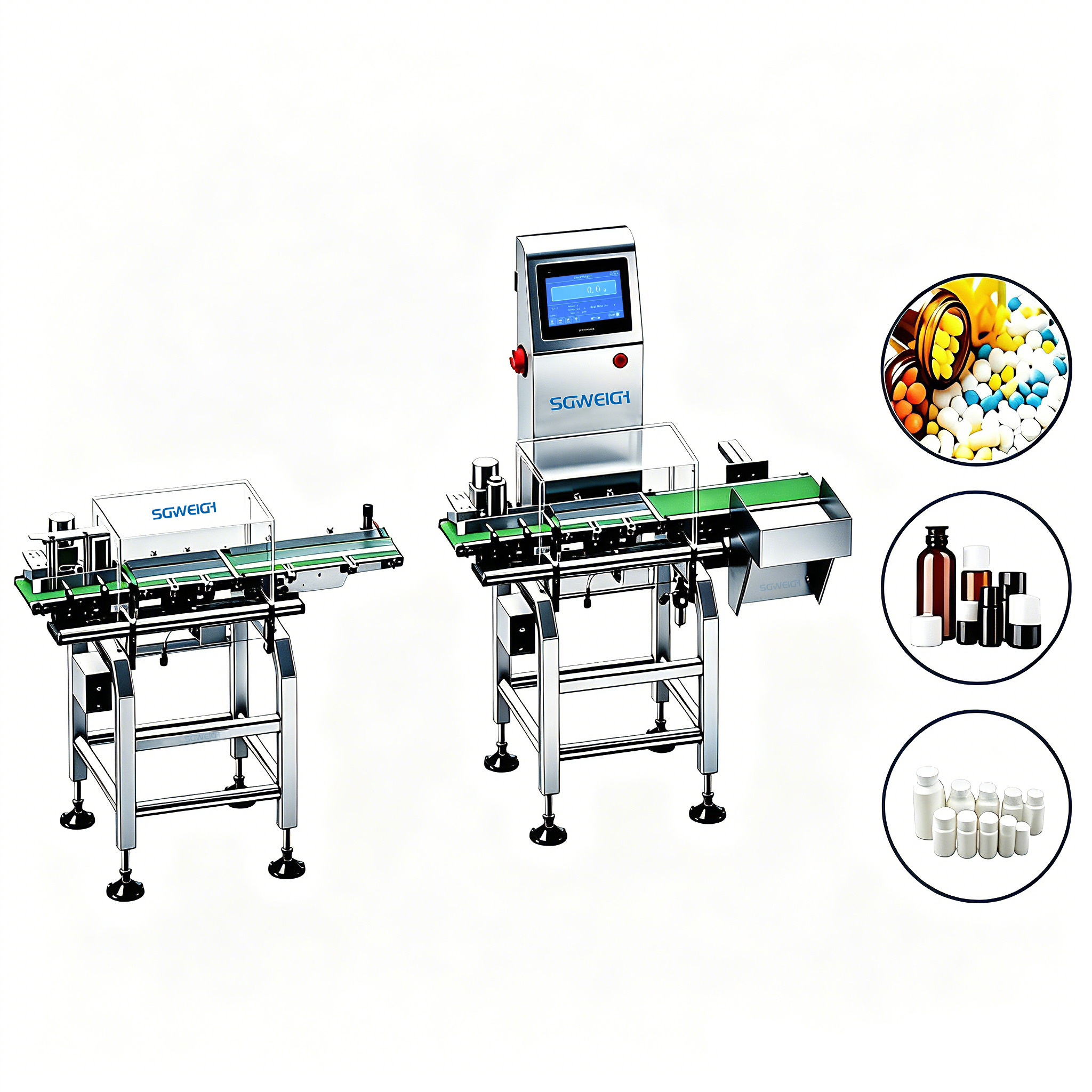

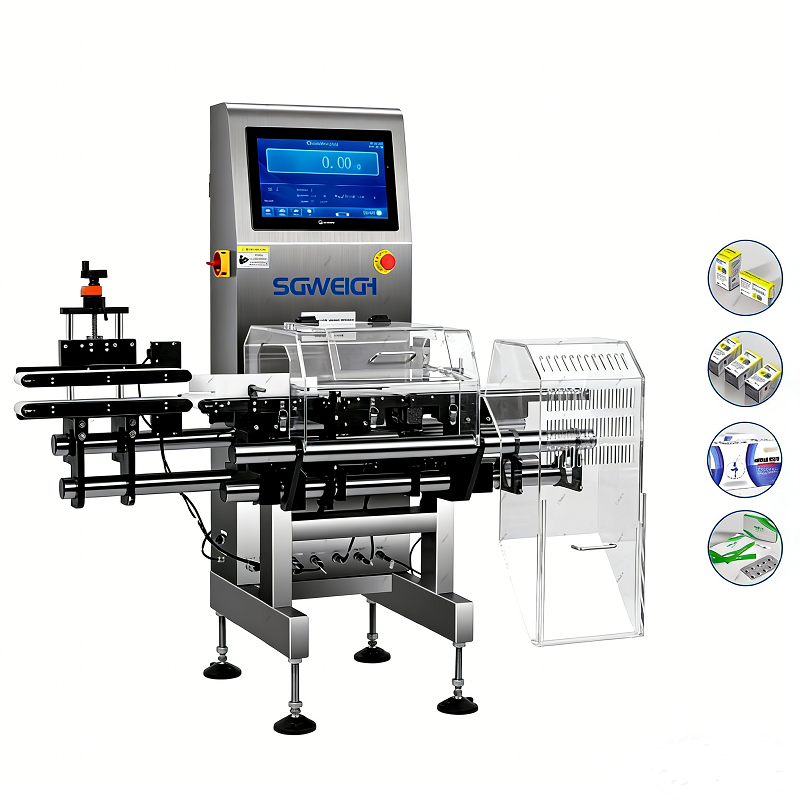
A checkweigher is a specialized type of catchweigher. The core difference lies in their purpose: a catchweigher captures and records individual weights, while a checkweigher verifies weights against a preset target and sorts/rejects non‑compliant items.
1. Core Definition & Relationship
Catchweigher (General Category)An automatic weighing instrument that measures and records the weight of discrete, individual items (e.g., packages, cartons, parcels) moving on a line.
Function: Capture weight data for recording, labeling, or logistics; no pass/fail decision.
Alias: In‑motion scale, dynamic weigher, conveyor scale.
Checkweigher (Subtype of Catchweigher)A catchweigher with built‑in judgment: it compares each item’s weight to a nominal target + tolerance range and sorts/rejects underweight/overweight products.
Function: Quality control; ensure compliance with regulations and packaging standards.
Alias: In‑line checkweigher, weight checker, reject weigher.


2.Key Differences
| Feature | Catchweigher | Checkweigher |
| Primary Goal | Capture & log individual weights | Verify weight vs. target; sort/reject |
| Decision Making | No pass/fail; data only | Accept / reject / sort into zones |
| Target Weight | No fixed target; weighs variable items | Nominal weight + tolerance (e.g., 100g ±2g) |
| Typical Use Case | Logistics, shipping, variable‑weight labeling | Food, pharma, cosmetics QC; regulatory compliance |
| Output | Weight record, label, shipping data | Pass/reject signal, count, statistics |
| Rejection Mechanism | None | Pneumatic pusher, diverter gate, air blast |
3. How They Work
Catchweigher Operation
Items move on a conveyor.
The scale captures the dynamic weight of each item.
Weight is recorded, printed on a label, or sent to a WMS/ERP.
No action is taken based on weight; it’s for data and traceability.
Checkweigher Operation
Items enter the infeed conveyor.
The scale weighs the item in motion.
Controller compares weight to preset limits:
In tolerance: Passes through.
Under/over weight: Trigger automatic rejection.
Data is logged for QC reporting and compliance.
4. Common Applications
Catchweigher
Parcel & Logistics: Shipping cost calculation; dimensioning + weighing.
Meat/Produce: Variable‑weight labeling (e.g., 450g ±5g).
Warehousing: Inventory tracking; case weight verification.
Checkweigher
Food & Beverage: Ensure packs meet declared net weight (e.g., 500g rice).
Pharmaceuticals: Verify tablet/capsule fill weight; avoid under‑dose.
Cosmetics: Check cream/lotion fill volume; comply with labeling laws.
Industrial Parts: Sort components by weight; detect missing parts.
5. Summary
All checkweighers are catchweighers, but not all catchweighers are checkweighers. Choose a catchweigher for data capture and variable‑weight applications; select a checkweigher for quality control, compliance, and automatic rejection of non‑compliant products.
TAGS